Best Practice in Co-production
Spotlight interview with Vicky Scott - CEO of Tower Hamlets CVS, lead investigator of HDRC and Sponsor of the Public Involvement workstream.
The phrase 'co-production' is used in different ways in different contexts. What does it mean to you?
I often think about the phrase ‘co-production’, which is a phrase that comes up a lot and is often used very loosely. Too often it describes a short consultation exercise: statutory partners design a service or policy, then give residents and voluntary and community sector (VCS) groups a few weeks to “feed back” on something that is largely already decided. Even when communities do respond thoughtfully and generously, it is rarSpotlight interview with Vicky Scott - CEO of Tower Hamlets CVS, lead investigator of HDRC and Sponsor of the Public Involvement workstream.e to hear how that feedback has shaped the final outcome.
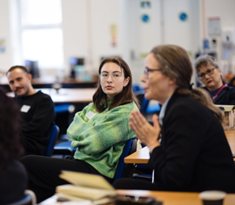
To me, co-production is fundamentally about sharing power. It is about communities being involved from the outset, shaping priorities, framing the questions, influencing decisions and holding partners to account. It is not a stage in a process; it is the process.
Based upon this understanding; how do you see a commitment to co-production underpinning the creation of good quality evidence?
If we are serious about addressing the wider determinants of health, then the people most affected by those determinants must be involved in generating the knowledge that shapes responses.
Communities in places like Tower Hamlets have too often had their experiences, stories and data “extracted” for research or policy purposes, without seeing tangible benefits in return. That extractive approach is damaging for communities, but it is also damaging for the quality of evidence itself.
When evidence is produced without privileging lived experience, it risks being partial, misdirected or irrelevant. Statutory systems alone cannot fully understand the realities of poverty, migration, racism, insecure housing or the daily pressures that shape health outcomes. Professionals and academics bring important expertise, but so do residents.
Can you identify something happening in Tower Hamlets you would characterise as good practice in co-production?
There are strong examples of co-production in practice locally. The VCS Compact is an important borough-wide example. It sets out shared principles and ways of working between the council and the voluntary and community sector, underpinned by a clear implementation plan. It demonstrates a commitment to partnership that goes beyond rhetoric.
Within the HDRC itself, there are also promising examples:
- Hidden Voices: an innovative workshop series focused on improving outcomes for Global Majority communities, bringing together VCS partners, statutory health and social care services, commissioners and academic researchers to turn insight into action.
- Research Café: creating accessible spaces where residents and researchers can meet, exchange ideas and build trust.
- Community Researchers Network: embedding lived experience directly into research processes.
What would you see as barriers to good practice being employed more widely in Tower Hamlets?
Good co-production takes time, energy and skill. It requires investment in relationships before outcomes are visible. It can also feel uncomfortable for institutions not used to sharing control. It is rarely neat and does not always fit easily into traditional commissioning cycles, governance structures or performance frameworks, and it can surface disagreement and tension.
Relinquishing control, genuinely doing so, is difficult. However, the alternative is far more costly: disengagement, mistrust, poorer evidence and services that fail to meet need.
If we want better health outcomes and stronger communities, then co-production cannot be optional. It must be embedded as a core way of working, not just in language, but in practice.