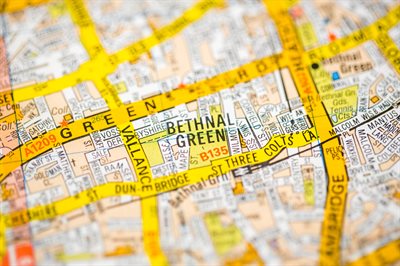
Map showing Bethnal Green
Five tenants living in a shared flat in Bethnal Green have been awarded substantial rent repayments after a First‑tier Tribunal concluded that the property was operated as an unlicensed House in Multiple Occupation (HMO) for an extended period.
The ruling, handed down on 6 March 2026, found that Mio Real Estate Ltd committed an offence under the Housing Act 2004 by managing a six-bedroom shared flat without the licence required under Tower Hamlets’ additional HMO licensing scheme.
The tribunal ordered the company to repay 70 per cent of the rent paid by each tenant, reflecting the seriousness of the breach and the landlord’s conduct. A further £777 in tribunal fees must also be reimbursed.
The case concerned Flat 5, Paris House, Old Bethnal Green Road, E2, a self‑contained ground‑floor flat where at least six unrelated people lived and shared facilities over a sustained period.
Tower Hamlets introduced additional HMO licensing in April 2019, requiring properties with three or more people from two or more households to be licensed. Despite admitting the property required a licence, the landlord failed to apply for one until September 2024, after the tenants had moved out and enforcement action was already under way.
The tribunal did not accept submissions that the company’s role was limited to acting on behalf of the freeholder. It found that Mio Real Estate Ltd was the tenants’ immediate landlord, having taken over the lease, granted the tenancies and collected the rent.
While the tribunal accepted that the landlord had not acted deliberately, it made clear this did not amount to a “reasonable excuse”. The judge noted that anyone operating a lettings business should be aware of licensing duties, particularly in a borough with well-established additional licensing schemes.
The tribunal also considered poor landlord conduct, including evidence that tenant deposits were not properly protected, when determining the level of repayment.
The ruling confirms that responsibility for licensing rests with those who control and manage occupied properties, not solely with freeholders. Landlords and rent‑to‑rent operators who grant tenancies and collect rent can be held responsible for compliance, regardless of how their arrangements are described.
For tenants, the decision shows that rent repayment orders remain a powerful tool where landlords fail to meet basic legal standards.
A rent repayment order (RRO) allows tenants and local authorities to reclaim rent where a landlord has committed certain housing‑related offences, including operating an unlicensed HMO. Tribunals can order the repayment of up to two years’ rent, making RROs an important enforcement tool and a direct route for tenants to secure redress when the law has been broken.
In Tower Hamlets, the council provides direct support to tenants to pursue rent repayment orders, helping residents navigate the tribunal process and present cases effectively. Since the council began assisting tenants with RRO claims, more than £1.3 million has been secured for renters across mandatory, additional and selective licensing schemes.
Tower Hamlets is among a small number of councils that provide this level of hands‑on support to tenants bringing RRO claims, with many other authorities referring cases to external advice services.
The ruling comes as the government prepares to implement the Renters’ Rights Act, which aims to strengthen enforcement, improve standards in the private rented sector and give tenants clearer routes to redress when landlords break the law.
David Joyce, Corporate Director for Housing and Regeneration, said:
“This outcome shows that tenants do not have to accept unsafe or unlawful housing. Where landlords fail to meet their legal duties, the council will take action and support residents to challenge it. As the sector moves towards stronger renters’ rights, this case sends a clear signal that we will continue to use our enforcement powers to protect tenants and uphold standards in Tower Hamlets.”
Posted on Monday 27th April 2026